




IMPORTANT SAFETY INFORMATION
CONTRAINDICATIONS
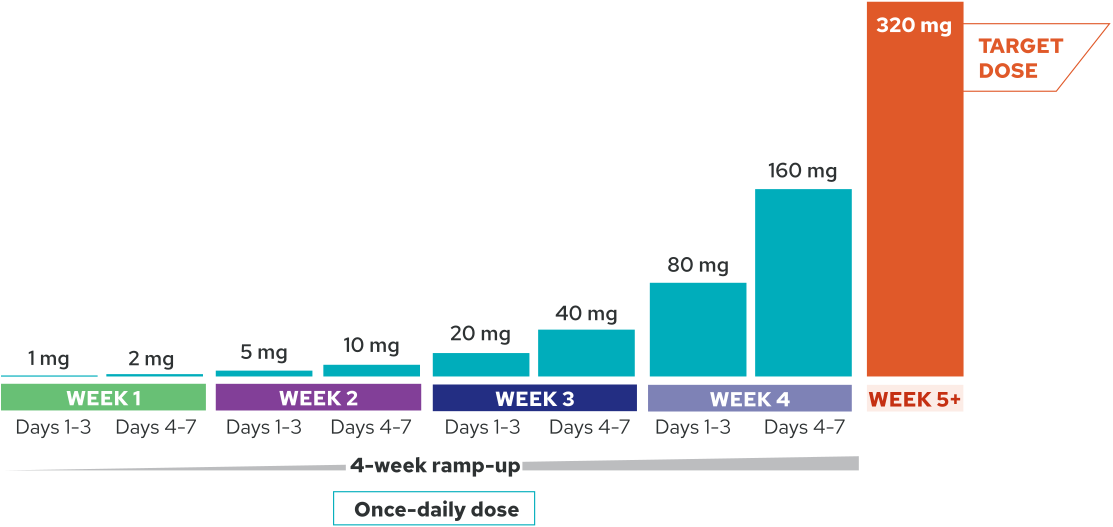
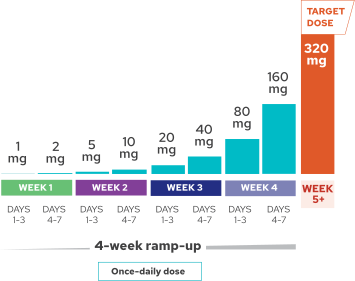
BEQALZI is contraindicated with strong CYP3A inhibitors at initiation and during the ramp-up phase due to the potential for an increased risk of tumor lysis syndrome (TLS).
WARNINGS & PRECAUTIONS
Tumor Lysis Syndrome (TLS):
BEQALZI can cause rapid tumor reduction and changes in blood chemistries consistent with TLS, which may be serious or life-threatening and require prompt management. TLS may occur as early as 4 hours after the first dose, with dose increases, or upon reinitiation following treatment interruption. Laboratory or clinical TLS occurred in 7% of patients who followed the recommended dose ramp-up. Assess all patients for TLS risk and initiate prophylaxis, including adequate hydration and antihyperuricemics. For patients at high risk of TLS, consider hospitalization with intravenous hydration and employ frequent monitoring. Monitor blood chemistries closely and manage abnormalities promptly. Interrupt BEQALZI for TLS; upon reinitiation, follow dose modification guidance in the Prescribing Information.
Serious Infections:
BEQALZI can cause fatal or serious infections. Serious infections occurred in 14% of patients; Grade 3-4 occurred in 17% (fatal: 2.6%). The most common Grade 3 or greater infection was pneumonia (10%). Monitor for signs and symptoms of infection and treat appropriately. Consider prophylactic antimicrobials and immunoglobulins. Interrupt, reduce dose, or permanently discontinue BEQALZI based on severity.
Neutropenia:
BEQALZI can cause serious or severe cytopenias, including neutropenia. Grade 3 or 4 decreases in neutrophils occurred in 18% of patients (Grade 4: 6%); febrile neutropenia occurred in 1.7% of all patients. Monitor complete blood counts throughout treatment. Interrupt treatment, reduce the dose, or permanently discontinue BEQALZI based on severity.
Embryo-Fetal Toxicity:
BEQALZI can cause fetal harm when administered to pregnant women. Advise patients of the potential risk to a fetus. Verify pregnancy status prior to initiation. Advise females to use effective contraception and males with female partners of reproductive potential to use effective contraception during treatment and for 1 week after the last dose.
ADVERSE REACTIONS
The most common adverse reactions (≥15%) are pneumonia (16%) and fatigue (16%). The most common Grade 3-4 laboratory abnormalities (≥15%) are decreases in lymphocytes (29%) and neutrophils (18%).
DRUG INTERACTIONS
Strong or Moderate CYP3A Inhibitors:
Concomitant use increases BEQALZI exposure. Avoid use of strong CYP3A inhibitors during BEQALZI initiation and ramp-up. Avoid use of moderate CYP3A inhibitors at the 1 mg and 2 mg doses; for all other doses, reduce the BEQALZI dose with concomitant use. See approved labeling for dose modifications.
Strong or Moderate CYP3A Inducers:
Concomitant use decreases BEQALZI exposure. Avoid use.
SPECIAL POPULATIONS
Lactation: Advise women not to breastfeed during treatment with BEQALZI and for 1 week after the last dose.
To report SUSPECTED ADVERSE REACTIONS, contact BeOne Medicines at 1-877-828-5596 or FDA at 1-800-FDA-1088 or www.fda.gov/medwatch.
Please see full Prescribing Information.
INDICATION
BEQALZI™ (sonrotoclax) is a BCL-2 inhibitor indicated for the treatment of adult patients with relapsed or refractory (R/R) mantle cell lymphoma (MCL) after at least two lines of systemic therapy, including a Bruton’s tyrosine kinase (BTK) inhibitor.
This indication is approved under accelerated approval based on response rate and durability of response. Continued approval for this indication may be contingent upon verification and description of clinical benefit in a confirmatory trial(s).
Please see full Prescribing Information.
References: 1. BEQALZI. Prescribing Information. BeOne Medicines USA, Inc.; 2026. 2. Eyre TA, Song Y, Hermine O, et al. Phase I/II study of sonrotoclax (BGB-11417) monotherapy in patients with mantle cell lymphoma previously treated with anti-CD20 therapy and a Bruton tyrosine kinase inhibitor. J Clin Oncol. Published online July 1, 2026. doi:10.1200/JCO-26-00550